
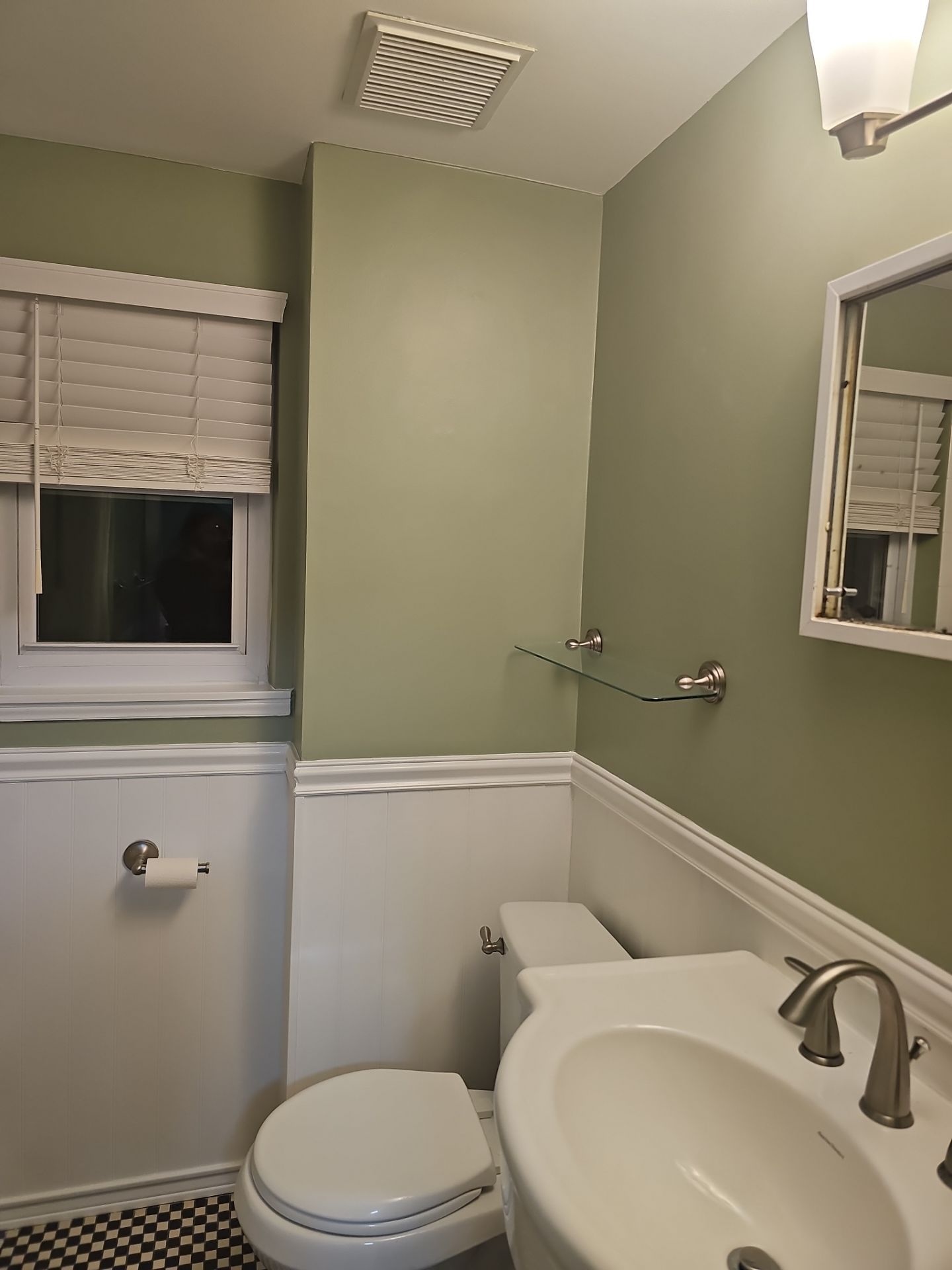
A successful interior repaint isn’t just a color change—it’s a full reset for how a home feels day to day. On this Marys Rd project in Ardmore, PA, the homeowner wanted a cleaner, more updated interior with a finish that looks smooth in natural light and still feels polished at night.
Because we work throughout Ardmore and the Philadelphia area, we approach interiors with a durability-first mindset. That means taking the time to prep correctly, fix what needs fixing, and apply paint in a way that produces consistent color, even sheen, and crisp transitions around trim and ceilings.
What the homeowner wanted
The goal was a refreshed interior that felt modern, calm, and welcoming—without looking overly trendy. Specifically, the homeowner asked for:
-
Walls that look uniform (no visible patch spots, dull areas, or “shiny vs flat” sections).
-
Clean, sharp lines along ceilings, door frames, and baseboards.
-
A washable, long-lasting finish suited to everyday use.
-
A professional work process that protects the home while we work.
How we delivered a smooth, refined finish
1) Planning and surface check
We began with a detailed walkthrough to review lighting, wall condition, and prior paint performance. This helps identify the common culprits behind mediocre paint jobs—small cracks, uneven sheen, old patchwork, and high-touch areas that may require extra attention for adhesion.
2) Protecting the space
Next, we set the home up for clean, controlled work. Floors and key surfaces were covered, furniture was carefully moved or protected, and sensitive edges were masked where needed. This step keeps the project tidy and helps the homeowner stay comfortable during the process—something many families in the Philadelphia suburbs value.
3) Repairing imperfections the right way
To get an “elegant” look, we focused on the wall surface first. Small holes, dents, and minor cracking were repaired, then sanded smooth. Where old paint edges or prior repairs created ridges, we feathered the transitions so the final result reads as one continuous, finished surface.
4) Cleaning and adhesion prep
Even in well-maintained homes, interior walls can hold dust and residue that affect how paint bonds. We made sure surfaces were clean and ready so the new coating could grip properly and cure evenly. When required, we dulled slick areas to improve adhesion.
5) Priming where it matters
Rather than priming “just because,” we used primer strategically—on repairs, on any areas with stains or inconsistent sheen, and anywhere a color shift required a more stable base. This step helps reduce uneven finish and supports a more consistent final appearance.
6) Careful application and detail work
With prep complete, we applied quality interior coatings with a focus on even coverage and a uniform sheen. We also took extra care on the details—straight cut-ins, clean corners, and a tidy finish around trim—because those lines are what make the entire room look professionally done.
7) Final walkthrough and touch-ups
After painting, we cleaned up thoroughly, removed protective materials carefully, and completed a final walkthrough. Any small touch-ups were handled immediately, so the homeowner could enjoy the upgraded space right away.
The result on Marys Rd
The finished interior feels brighter, cleaner, and more cohesive, with walls that look smooth and consistent from multiple viewing angles. The trim and transitions look sharp, and the overall look is timeless—an update that fits the home rather than overpowering it.
If you’re considering interior painting in Ardmore or anywhere near Philadelphia, this project is a good example of why preparation, surface repair, and precise finishing are the difference between “new paint” and a true transformation.
FAQs
1) How long does an interior painting project like this typically take?
Timing depends on how much prep is required, how many surfaces are being painted, and drying time between coats. A straightforward room can move quickly, but projects with repairs, trim detail, or multiple colors naturally take longer. We prioritize a schedule that allows proper drying and a clean finish rather than rushing the process.
2) Can we live in the home while the interior painting is being completed?
Often, yes. Many homeowners stay home during the project when we can stage the work by room, keep pathways clear, and do a consistent daily cleanup. If odors are a concern, we can discuss low-VOC options and ventilation steps to make the process more comfortable.
3) When do you recommend priming instead of just painting?
Primer is especially important over fresh repairs, stains, glossy surfaces, or when changing from dark to light colors. It improves adhesion and helps the finish coat look even across the entire wall. Skipping primer in the wrong situation is one of the fastest ways to end up with flashing, uneven sheen, or early peeling.
4) Why do some painted walls look patchy or uneven in certain lighting?
Natural light and overhead lighting can highlight surface texture, repair edges, and sheen differences. Uneven sanding, unprimed patches, and inconsistent absorption are common causes. A prep-focused approach—repair, sand, prime, then paint—keeps the final finish looking consistent from morning to night.
5) How should we care for newly painted walls after the job is done?
It’s best to avoid washing the walls for the first couple of weeks while the paint cures. After that, gentle cleaning with a soft sponge and mild soap works well for most finishes. Keeping humidity controlled and using good ventilation also helps maintain a clean, durable look long term.
If you’re ready to transform your home’s interior, PAINT Philadelphia is here to help. Whether it’s a single room or a full-house update, we’re prepared to bring your vision to life. Contact us today to schedule a consultation and take the first step toward your dream home.