
Choosing when to paint your home’s exterior on the Main Line isn’t just a scheduling decision—it determines how well the coating bonds, how evenly it cures, and how long it resists peeling and early wear. Exterior paints typically perform best when you can stay in a moderate temperature band (often around 50°F–85°F for many latex/acrylic products) and avoid high humidity and rain during the initial dry/cure window.
Why timing matters more than most homeowners think
Exterior paint doesn’t “dry” the same way in every season. Temperature and humidity control evaporation and film formation, and when conditions are off, paint may not level out properly, may not cure as designed, or can become more vulnerable to adhesion problems later.
Humidity matters because high moisture in the air can slow drying and increase the chance of paint curing poorly, and many pros aim for a moderate humidity range (often cited around 40%–70%) to help paint dry consistently.
Rain and dew are also critical—if moisture hits the surface too soon, it can damage uncured paint, and some guidance recommends paying attention to dew point (for example, keeping surface temperature above dew point to avoid condensation).
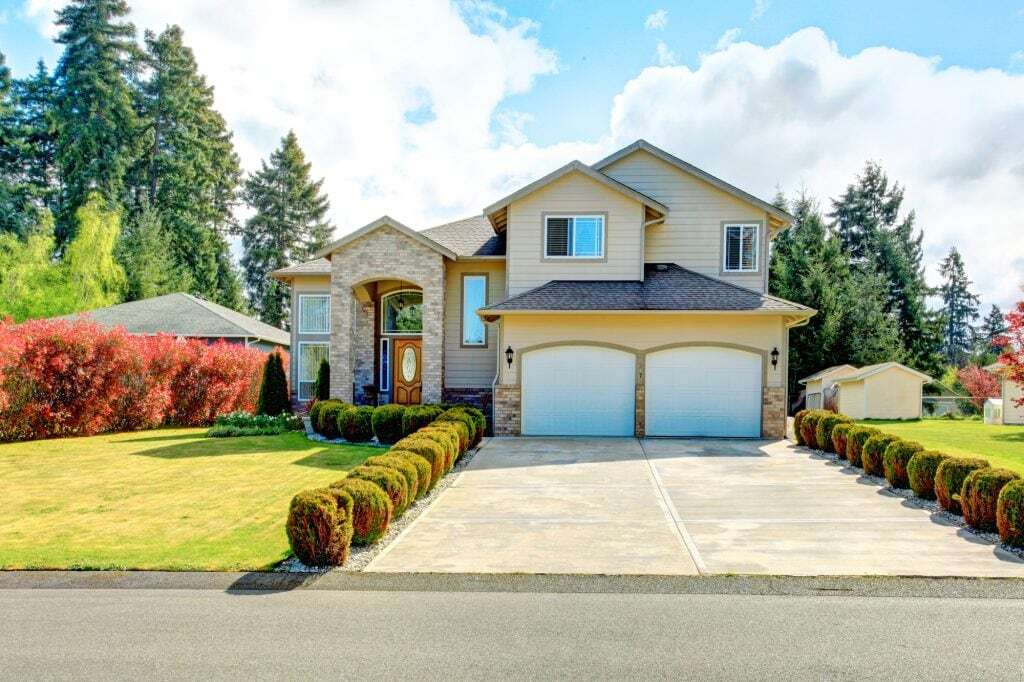
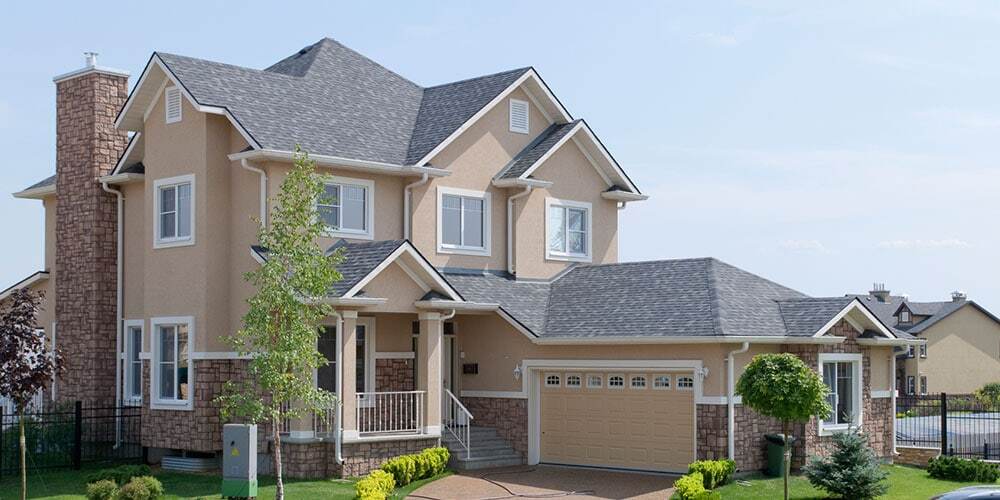
Big siding house with garage and high column porch. Green lawn with trimmed hedges and red bushes make the curb appeal stand out
The Main Line “ideal window” (what to look for)
Instead of picking a season blindly, use a conditions-first approach:
-
Target air temps that match your product specs; many exterior latex/acrylic paints are commonly recommended in moderate conditions (often around 50°F–85°F) for best handling and curing.
-
Keep humidity reasonable; a commonly recommended working range is about 40%–70% to support predictable drying.
-
Avoid dew/condensation risk by watching dew point; one guideline is to ensure the surface temp stays more than 5°F above the dew point.
-
Plan for stable days and nights; Consumer Reports notes it should be at least 50°F at application and not drop below 32°F at night for several days after.
A local crew will also check surface temperature (not just the weather app), because sun-baked siding can be significantly warmer than the air—affecting how fast paint flashes and levels.
Season-by-season guidance (Main Line practical view)
Spring: Great results if you control moisture
Spring can be a strong choice because moderate temps help paint flow and bond well.
The main planning issue is wet surfaces and surprise showers—after washing, rain, or heavy morning dew, siding needs real dry-out time before you prime or paint.
Summer: Productive, but heat management is everything
Summer gives you longer workable days, but hot surfaces and direct sun can make paint dry too fast, reducing leveling and increasing lap-mark risk.
If you paint in summer, plan around the sun and heat: start earlier, follow the shade, and avoid applying on surfaces that are baking hot.
Fall: Often the most predictable “quality season”
Fall frequently brings steadier temps and lower humidity, which helps paint dry at a controlled pace and form a stronger film.
It’s also a smart “protect before winter” window—getting a sound coating on trim and siding helps reduce moisture intrusion risk when harsh weather returns.
Winter: Possible in narrow cases, usually not ideal
Cold slows drying and curing, and if temperatures drop too low, coatings can have adhesion trouble or fail early.
Some products are formulated for lower temps, but you still need to meet minimum surface-temperature requirements for long enough after application (guidance commonly references thresholds like 35°F–50°F depending on product).
A smarter scheduling method than “pick a month”
Use this simple 5-step method to pick your exact dates:
-
Identify your home’s exposure: south/west faces heat up faster and can force faster drying.
-
Confirm your product’s application range on the label/technical sheet and plan within it.
-
Watch nighttime lows and dew risk (surface temp vs. dew point matters).
-
Reserve a multi-day buffer for washing, repairs, drying, priming, then topcoats.
-
Build a rain plan: if rain hits, stop and wait for surfaces to fully dry before resuming.
If you’re coordinating contractors in Philadelphia and the surrounding suburbs, booking earlier also helps you secure the best weather window instead of settling for “whatever dates are left.”
Prep and curing: where durability is won or lost
Even perfect weather won’t save a job if moisture is trapped under paint. Washing, scraping failing edges, repairing wood/caulk, and allowing full dry time are what set the stage for long-term adhesion.
Also remember that curing continues after paint feels dry to the touch—cool nights and damp air can extend the time before the coating reaches full durability.
For many homeowners near Philadelphia, the biggest “timing” mistake is painting immediately after rain or power washing without giving siding enough time to dry out completely.
FAQs
1) What’s the best temperature range for exterior painting?
Many guides recommend applying exterior latex/acrylic paints in moderate conditions—often roughly 50°F–85°F—because paint flows and cures more reliably.
2) Why does humidity cause exterior paint to fail?
High humidity can slow drying and interfere with curing, which can weaken adhesion and increase the risk of defects; a commonly recommended working humidity range is around 40%–70%.
3) How do dew point and condensation affect painting?
If the surface temperature drops close to the dew point, moisture can condense on the siding and sabotage adhesion; one guideline is keeping surface temperature more than 5°F above the dew point.
4) Can I paint in winter if I use “cold-weather” paint?
Sometimes, but you still need to meet minimum surface and air temperatures for long enough after application, or you risk adhesion and premature failure.
5) How long should temperatures stay safe after painting?
Consumer Reports advises it should be at least 50°F during application and not drop below 32°F at night for several days after, to reduce failure risk.
 Main Line, PA