
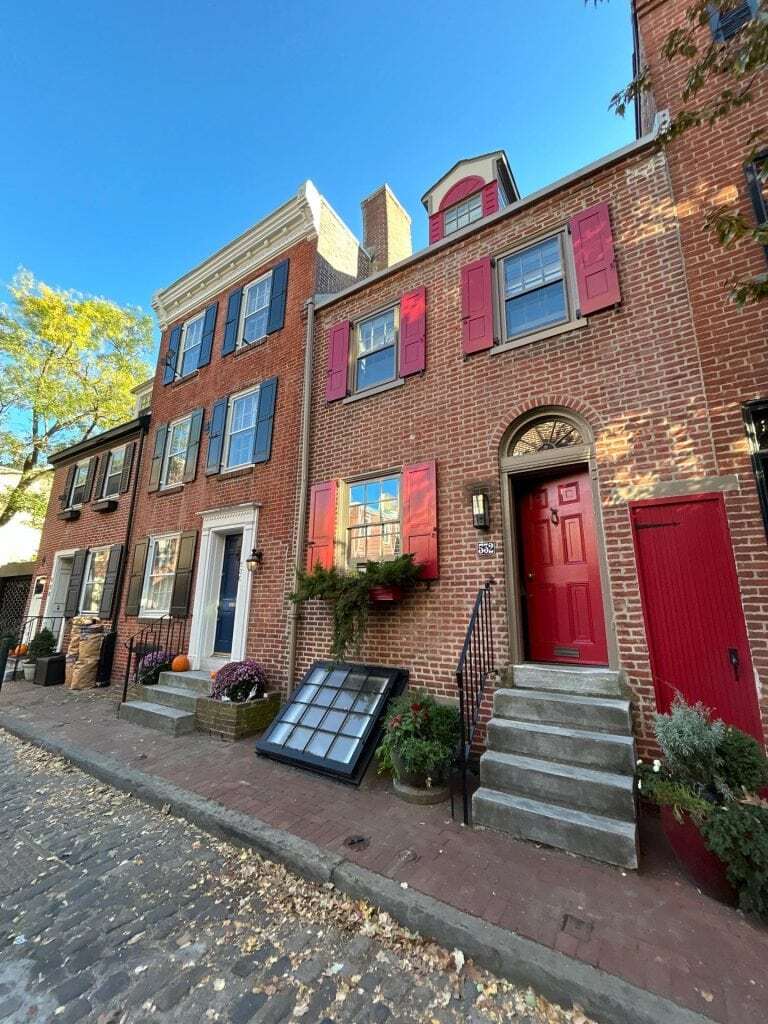
Most people who call us are getting two or three quotes before they pick a painter. They want to know why one estimate can come in way higher than another on what looks like the same house. Sometimes the gap is thousands of dollars.
When you ask us up front how much an exterior paint job runs, we can’t give a real number until we see the place. The price is built from a bunch of moving pieces. Same house, different conditions, very different quote.
Here’s what we actually look at when we’re putting an estimate together.
1. The Size of Your Home
The bigger the house, the higher the quote. Obvious enough.
What people miss is that square footage from the listing isn’t what we’re painting. We measure the actual walls and trim, minus windows and doors. Two houses that look the same size from the street can come out really differently once you do that math. A wraparound porch, a lot of windows, a third floor — those all change things.
2. The Type of Home You Live In
Philly’s housing mix is unusual. Rowhomes, twins, colonials, ranches, splits, the big stone Main Line stuff. Each one paints differently.
A two-story brick rowhome in South Philly is a different job than a three-story twin in Mt. Airy, and a colonial in Newtown is different again. Rowhomes especially come with their own quirks. Attached neighbors mean less working room. Tight side alleys, third-floor dormers, and mansard roofs all affect how we set up and how long things take.
If you’re in a rowhome, that’s often the reason your quote can come in higher than a friend’s quote on a single-family home with similar square footage.
3. The Surface We’re Painting
The material your house is made of has a real impact on the quote.
Brick is everywhere in Philly. It’s porous, so it soaks up more paint than other surfaces, and the prep is different. Wood siding can look great when it’s been kept up, but it’s the most prone to peeling and rot, which usually means more prep. Vinyl and aluminum tend to be quicker to work on, but you can’t put just any paint on them or they’ll warp. Stucco needs its own approach, especially around cracks.
Tell us what you’ve got and we’ll tell you what we’d use. If you’re considering something different on brick, we also do limewash, which behaves nothing like regular exterior paint.
4. How Much Prep the House Needs
Prep is the part nobody sees, and it’s where a lot of the cost lives. Scraping loose paint, sanding, fixing rotted trim, caulking, washing the house down. On a clean home that’s been kept up, prep moves fast. On a 100-year-old home in Philly that hasn’t been painted in fifteen years, prep can take longer than the actual painting.
This is where you have to be careful comparing bids. An estimate that’s way lower than the others is sometimes lower because the painter is shortchanging prep. That looks like savings until you’re calling someone two years later because the paint is already peeling.
5. How Many Colors You Want
One body color, one trim color is the standard setup. It’s quick to scope and it covers most homes.
Once you start adding — different shutter color, contrasting front door, accent on the dormers, custom porch posts — every color adds time, material, and cleanup between coats. We’re not saying don’t do it. Some of our favorite jobs have been multi-color. Just know it’ll show up in the price.
6. The Quality of Paint You Pick
Exterior paint isn’t the same product at different prices. The chemistry actually changes as you move up the line.
Lower-tier paint will hold up for a few years. Premium paint, the kind we usually recommend for Philly’s freeze-thaw winters and humid summers, can last ten years or longer. Cheaper paint feels like savings until you’re repainting earlier than you wanted. When we walk through a quote with you, we’ll tell you what tier we’re proposing and why.
7. How Easy It Is to Work on Your Home
Some houses are simple to set up on. Two stories, open yard, easy ladder access. Plenty of others aren’t. Three-story rowhomes, narrow side alleys, mature landscaping that has to be protected, detached garages, steep grade lots, overhead wires.
The harder it is to physically reach the surfaces, the longer the job takes. That isn’t a hidden charge. That’s the actual cost of doing the work safely.
8. Anything Out of the Ordinary
There’s always a category for stuff that doesn’t fit the standard checklist. On a Philly job, it’s usually one of these.
Lead paint. Most homes built before 1978 had it, which covers a lot of Philadelphia. Lead-safe practices are required by EPA rules and they add to the bill.
Severe weathering. Paint that’s failing badly may have to come all the way off, not just a scuff sand.
Mold or mildew. You can’t paint over it. It has to be treated first.
Masonry or trim repair. Damaged brick, rotted wood, missing siding pieces all get fixed before paint goes on. Some painters subcontract this out. We usually handle it ourselves.
You shouldn’t get hit with any of this mid-project. A good quote calls it out at the start.
What a Real Quote Should Tell You
When you get an estimate from anyone, you should be able to read it and walk away knowing what surfaces are getting painted (and which aren’t), what prep is included, how many coats, what paint product is going on the house, the timeline, the payment terms, and what cleanup looks like at the end.
A single number with no breakdown isn’t a quote. It’s a guess. Ask for the detail. Anyone serious will give it to you.
How to Actually Compare Estimates
Two estimates for the same house can come in thousands of dollars apart for completely legitimate reasons. The cheaper one isn’t automatically the better deal, and the highest one isn’t automatically the best work.
The way to compare them is by what’s in the scope, not by the bottom-line number. If you’re collecting bids, ask each painter to walk you through the eight things above. Whoever has clear answers and shows their math is usually the one who won’t surprise you later.
Get a Real Number for Your Home
If you’d like to see what an estimate actually looks like for your house, we’ll come take a look and put one together. We’ll explain what we’d do, why, and what it costs.
PAINT Philadelphia is a veteran-owned painting company serving Philadelphia, Bucks County, Montgomery County, and the surrounding areas. We do interior painting, exterior painting, limewashing, and cabinet refinishing.
Curious how these factors translate to dollars? Our exterior painting pricing guide walks through typical project ranges.

Andrew Tomasetti is not just a painting contractor, he is the owner of Paint Philadephia; a painting company in the greater Philadephia area that services the Holland, Newtown, Churchville, Yardley, Richboro areas.
Paint Philadephia is an interior, exterior and cabinet painting company that offers their customers top-notch services and their exclusive “On Time, On Dime” guarantee. They take a holistic view to all of their paint jobs offering free color and design consults, test samples, free touch ups on all painting projects, and warranties on all of their work.
Andrew Tomasetti is both a veteran and an engineer. His passion for hands-on work comes from his father and uncle and runs deep in his veins.