
Cabinet Painting Tips
Should You Paint, Refinish, or Replace Your Kitchen Cabinets?
June 15, 2026
Most people who call us about their cabinets already know they want a change. What they don’t know is whether they should paint what they’ve got, have the doors swapped out, or just rip everything out and start over. It’s a fair question, and the honest answer is that it depends almost entirely on what’s behind the doors, not the doors themselves.
So before you spend a dollar, open a cabinet and look at the box. That’s the part bolted to your wall, and it’s the part that decides everything.
Look at the boxes first
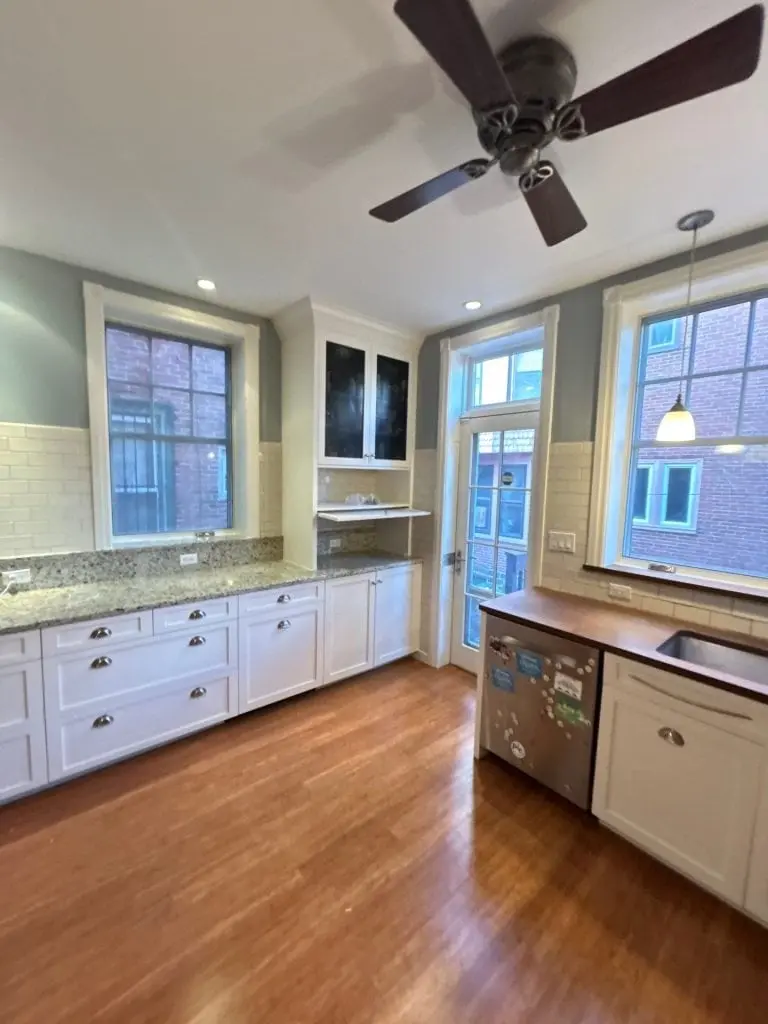
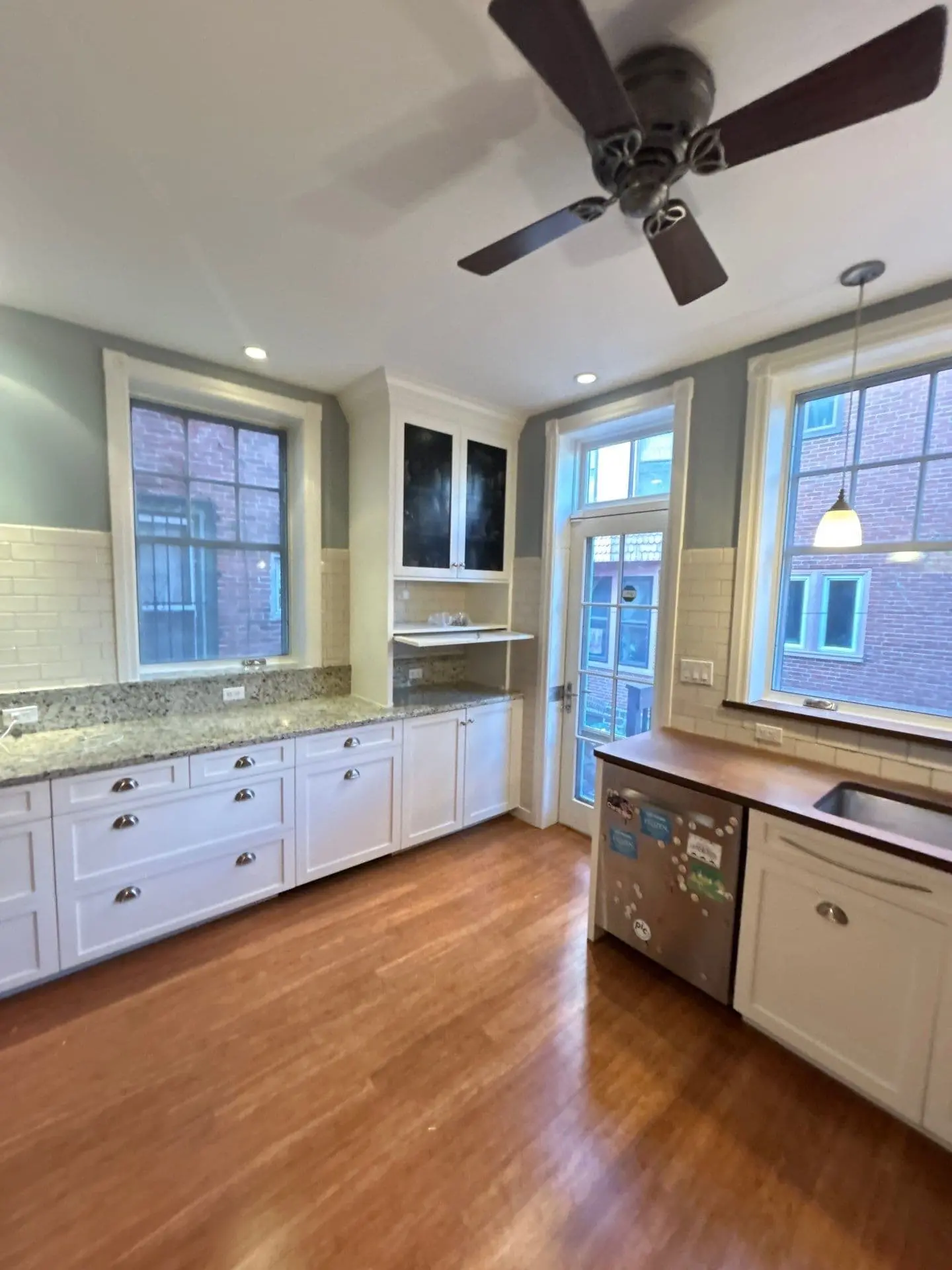
We’ve walked into plenty of Philadelphia kitchens where the homeowner was ready to spend twenty grand replacing cabinets that didn’t need replacing. The doors looked tired, sure. But the boxes underneath were solid wood, built better than most of what you’d buy today. Paint those and you’ve got a kitchen that looks brand new for a fraction of the cost.
The flip side is just as real. If the boxes are swollen at the base from an old dishwasher leak, or the frames are soft, warped, or pulling away from the wall, no amount of paint fixes that. Paint hides it for a season and then the problem comes right back through. That’s the one situation where replacing isn’t the expensive choice, it’s the right one.
A quick gut check: solid, dry boxes that are maybe less than twenty years old? You’ve got options, and the cheap one is usually the smart one. Damaged or failing boxes? You’re probably replacing, and that’s okay.
Painting: the best value when the bones are good
This is what we do most, and for good reason. Painting keeps your existing cabinets, doors, and layout and gives everything a fresh, durable finish. It’s far and away the most affordable route, and on good wood the result genuinely surprises people. Industry figures put refinishing at roughly half to three-quarters less than new cabinets, which lines up with what we see (Angi).
The one thing I’ll be straight about: cabinets are the hardest thing in your house to paint well, because they get touched, wiped, and bumped every single day. This is not a job where you grab leftover wall paint and a roller. It takes real cleaning and degreasing, sanding, the right primer, and a cabinet-grade finish. Done that way, it holds up for years. Done the cheap way, it chips by Thanksgiving, and at that point you’ve spent money and still need it redone. If you want the honest version of what that work runs, we broke down what cabinet painting really costs here.
Refacing: a new style without the demolition
Refacing is the middle path. You keep the boxes, but the doors and drawer fronts get replaced and the visible surfaces get covered in new veneer. The difference from painting is that you can actually change the door style, not just the color, so if you’re tired of the look and not just the finish, this gets you there without tearing the kitchen apart or losing it for weeks. It costs more than paint and a lot less than full replacement.
Replacing: when the boxes or the layout are the problem
Replacement is the big one, most expensive and most disruptive, and there are really only two times it’s the right move. One, the cabinets are genuinely failing: water damage, rot, warping, boxes that won’t hold. Two, the layout itself is what’s driving you crazy. If you can’t fit two people in the kitchen or there’s nowhere to put anything, painting just gives you a nicer-looking version of a kitchen that doesn’t work. Replacing is the only option that lets you move walls of storage around, and that’s what you’re paying the premium for.
How we’d tell you to decide
When we’re standing in someone’s kitchen, it really comes down to three questions. Are the boxes sound? If not, lean toward replacing. If they are, what are you actually trying to change? A color or a fresh finish points to painting. A whole new door style points to refacing. A different layout points to replacing. And then, what’s the budget? Paint stretches the furthest by a wide margin, so if the boxes are good, painting usually gives you the most visible change for the least money.
The last piece of advice is the cheapest: get one honest set of eyes on it in person before you commit. A good painter or cabinet pro can tell you in a few minutes whether your cabinets are worth saving. We’d rather tell you to paint and save your money than sell you something you don’t need.
A quick word on Philadelphia kitchens
A lot of homes around here, the older row homes especially and plenty of Main Line properties, came with solid hardwood cabinetry that’s worth keeping. We see it constantly: original wood boxes in great shape hiding under a dated finish. Older kitchens also tend to run humid, which is exactly why prep and the right products matter more here than they would in a newer build. Cut a corner on a cabinet finish in a Philly kitchen and the humidity will find it.
When to bring in a pro
Cabinets are the project where DIY goes sideways most often, because the prep is unforgiving and the wrong product peels. If your boxes are solid and you want a finish that survives daily kitchen life, it’s worth having someone handle the prep and coating properly. And if you’re genuinely not sure whether yours are worth saving, that’s the easiest thing in the world for a pro to answer for you.
That’s what we do at PAINT Philadelphia. You can see our cabinet painting work, and our interior painters in Philadelphia cover Philadelphia, Bucks, Montgomery, Delaware, and Chester counties. Every job starts with a free, no-pressure estimate, and an honest answer about which way you should go.
Frequently Asked Questions
Is it cheaper to paint or replace kitchen cabinets?
Painting is far cheaper. Because you keep the existing boxes, doors, and layout and only change the finish, painting typically runs roughly 50 to 75 percent less than full replacement. As long as the boxes are structurally sound, you get most of the visual change for a small fraction of the cost.
How do I know if my cabinets are worth painting?
Look at the boxes, the frames attached to the wall. If they’re solid, dry, and not warped or rotted, and generally under about 20 years old, they’re good candidates for painting. If the boxes are water-damaged or failing, paint only hides the problem for a while, and you’re usually better off replacing.
What’s the difference between refinishing and refacing?
Refinishing keeps your existing doors and boxes and gives them a new paint or stain finish, so it changes the color. Refacing keeps the boxes but installs new doors and drawer fronts and re-covers the visible surfaces, so you can change the actual door style. Refinishing is the cheapest, refacing sits in the middle, and both cost well under full replacement.
When should I just replace my cabinets?
Replace when the cabinets are failing, with water damage, rot, warping, or loose boxes, or when you want to change the kitchen’s layout or storage. Replacement is the only option that lets you change the footprint, which is what you’re paying extra for.
Does painting kitchen cabinets actually last?
Yes, when it’s done right. A lasting cabinet finish needs proper cleaning and degreasing, sanding, the right primer, and a cabinet-grade coating, not standard wall paint. Cabinets get handled every day, so the prep and product are the whole difference between a finish that lasts years and one that chips within months.
Budgeting the wider project beyond the cabinets? Our interior painting pricing guide covers what interior work typically runs.

Andrew Tomasetti is not just a painting contractor, he is the owner of Paint Philadelphia; a painting company in the greater Philadelphia area that services the Holland, Newtown, Churchville, Yardley, Richboro areas.
Andrew Tomasetti is both a veteran and an engineer. His passion for hands-on work comes from his father and uncle and runs deep in his veins.
Ready to get started?
Let’s get your project painted.
Schedule a free in-home consultation or call us at (267) 229-4333.